Guitar Anatomy
Know your instrument. Understanding the parts, string names, and fretboard layout is the foundation of everything that follows.
Parts of the Guitar
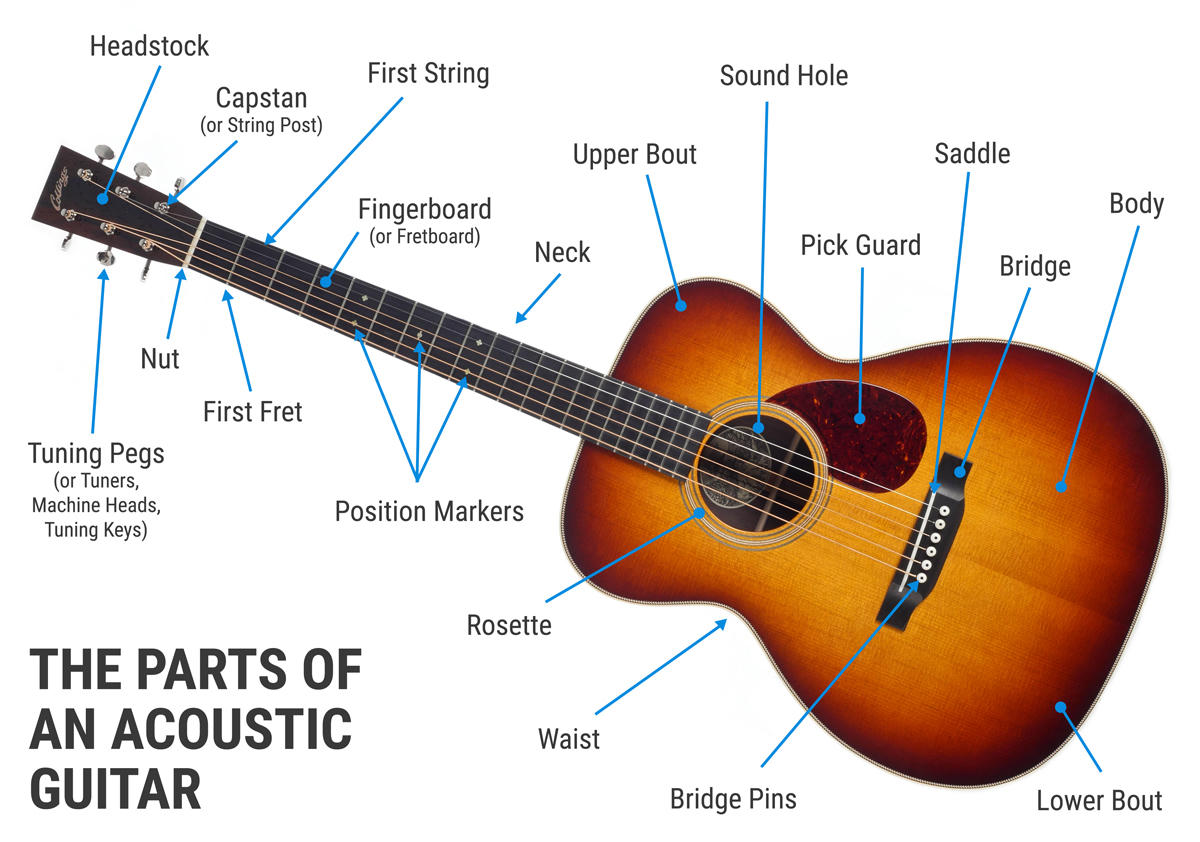
This labeled diagram shows the main parts of a typical acoustic guitar. Most of these parts exist on electric guitars as well (with a few differences noted below).
Headstock & Tuning Machines
Holds the tuning keys (also called machine heads or tuners). Turning them raises or lowers the pitch of each string.
Nut
The small strip (usually bone, plastic, or graphite) at the top of the neck that guides the strings and sets the open-string height.
Neck & Fretboard
The long piece you fret notes on. Frets are the metal strips; the spaces between them are called frets (1st fret, 2nd fret, etc.).
Body
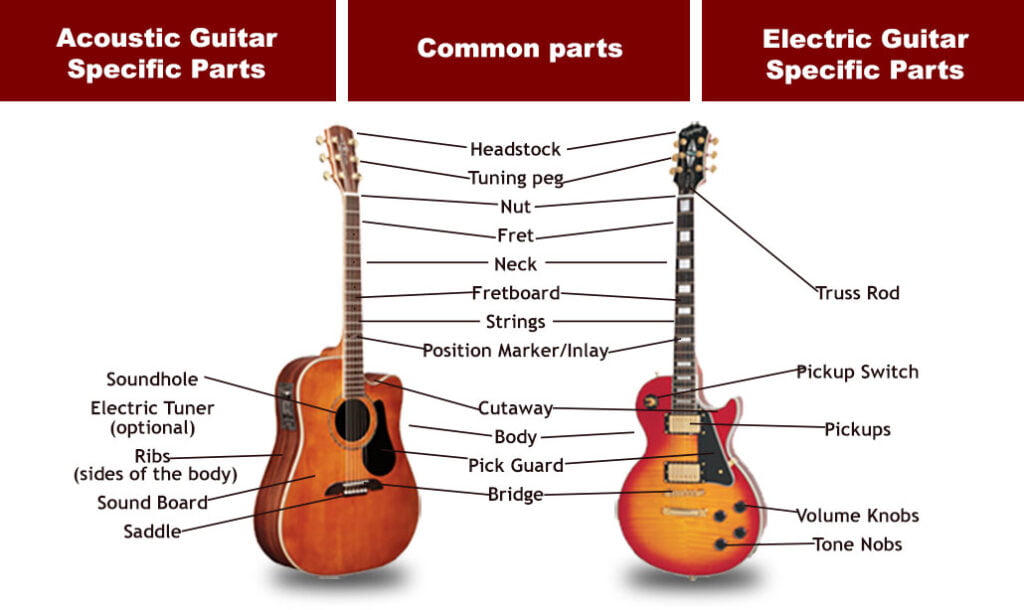
Acoustic: hollow with a sound hole that projects sound. Electric: usually solid wood with pickups that convert string vibration into an electrical signal.
Bridge & Saddle
Anchors the strings at the body end. The saddle is the thin piece the strings rest on; its height and position affect action and intonation.
Pickups (Electric only)
Magnetic devices under the strings that capture vibration. Single-coils and humbuckers produce different tones.
Acoustic vs Electric – Side by Side
Many parts are shared. The biggest differences are the solid body + pickups on electrics and the hollow body + sound hole on acoustics.
String Names & Numbers
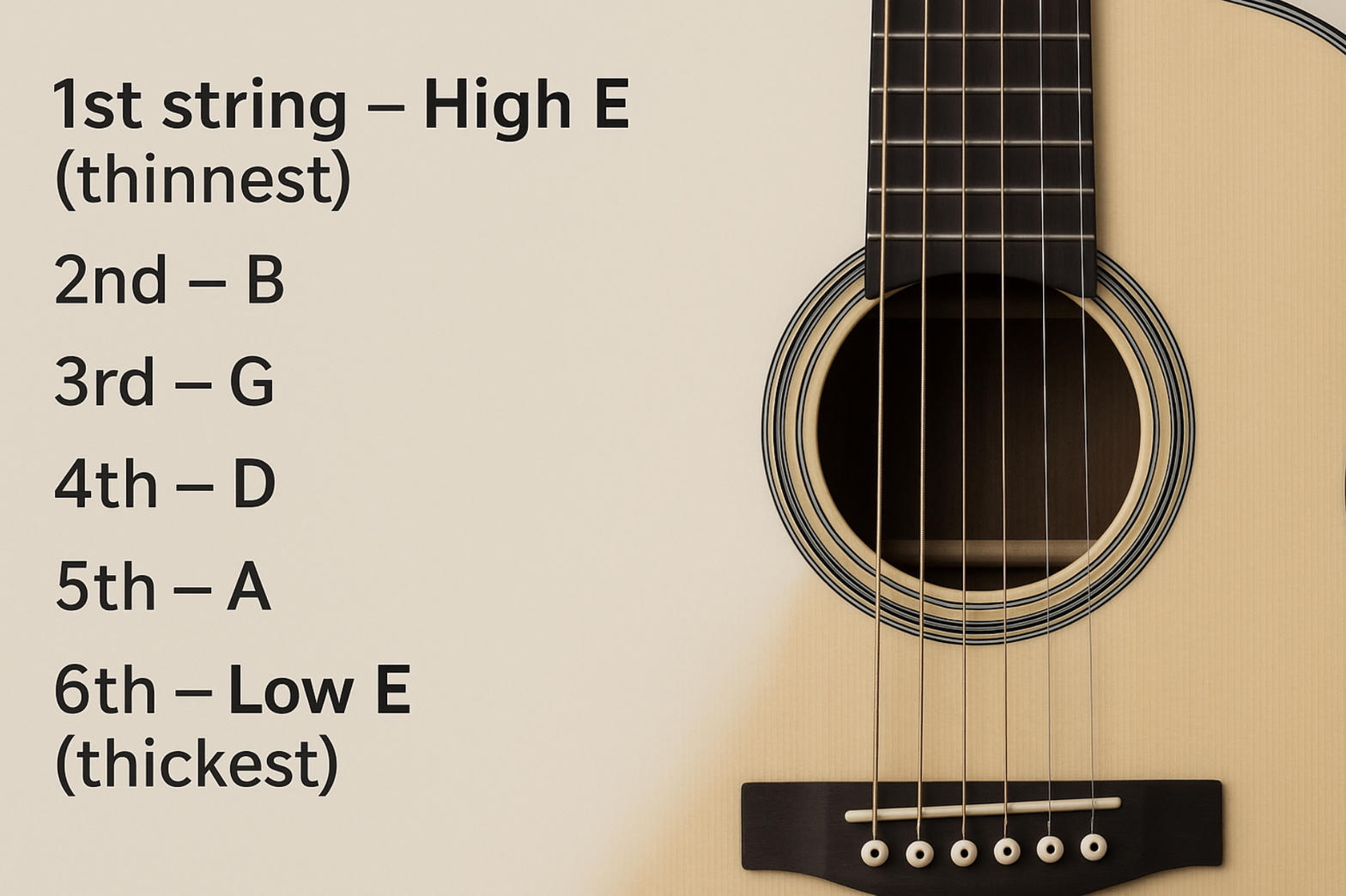
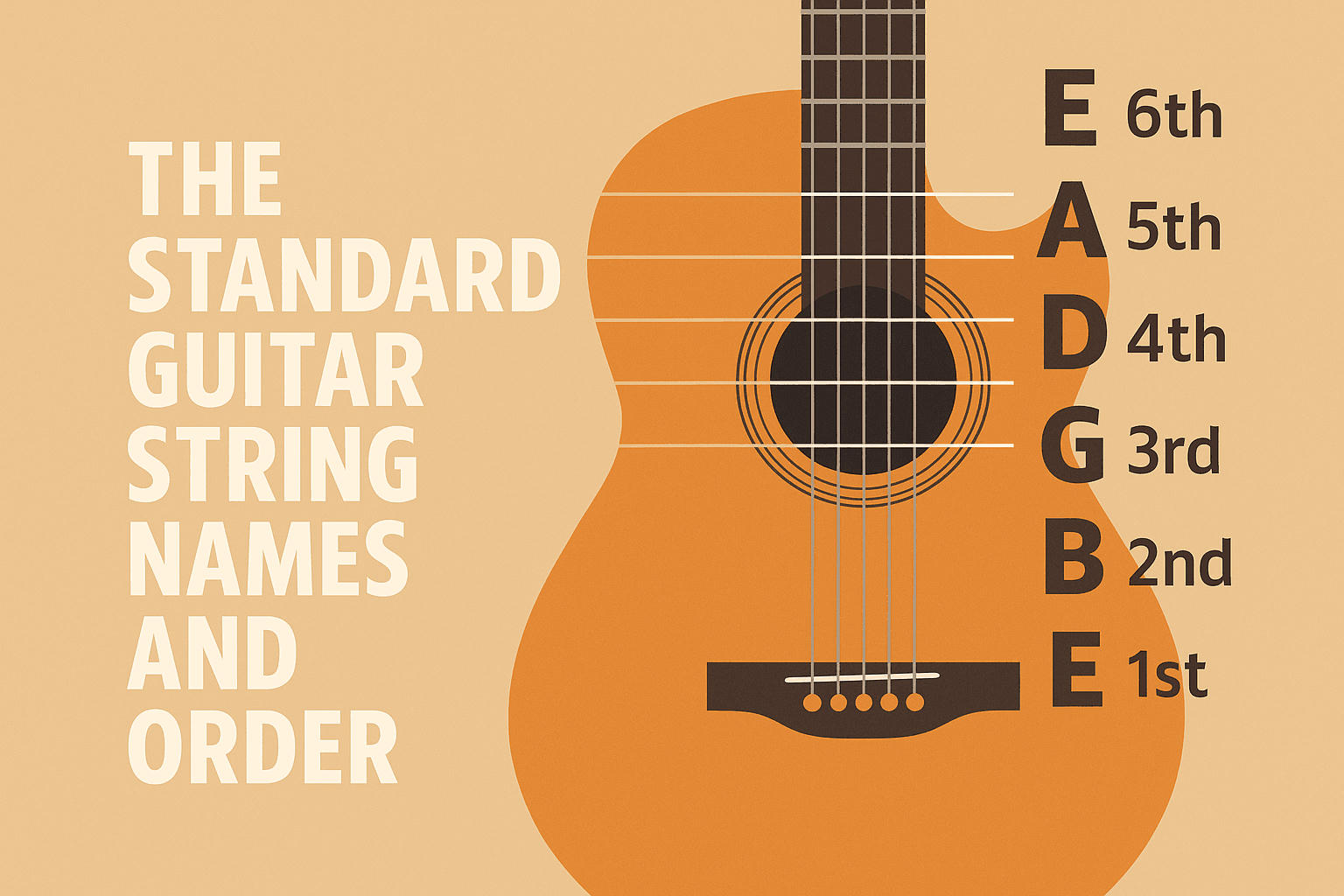
Strings are numbered from thinnest to thickest (1 = high E, 6 = low E). Standard tuning from low to high is E – A – D – G – B – E.
• Eat All Day Get Big Easy
• Eddie Ate Dynamite, Good Bye Eddie
• Elephants And Donkeys Grow Big Ears
Fret Numbering
Frets are numbered starting from the nut:
- Open string = no fret pressed
- 1st fret = first metal strip from the nut
- 12th fret = one octave higher than the open string (usually marked with a special inlay or double dots)
Most electric guitars have 21–24 frets; acoustics often have 18–20. Position markers (dots or inlays) commonly appear at frets 3, 5, 7, 9, 12, 15, and 17 to help you orient yourself quickly.